The safe way to remove moss from a roof is slow and boring. On a dry day, brush it off by hand with a soft brush, working down the slope in the same direction the shingles lie, then treat what’s left so it dies at the root. Don’t use a pressure washer, don’t use a metal scraper, and don’t go up at all if the roof is steep, wet or two storeys high.
We’re Alex and Emma of Shine Pros, a husband-and-wife exterior cleaning team in Greater Victoria. We’ve cleaned moss off over 200 roofs since August 2022. Here’s how to do it yourself without damaging the shingles, and when it’s worth handing off.

Should you remove roof moss yourself?
Sometimes. A low-pitch, single-storey roof with a thin layer of moss is a reasonable DIY job for someone comfortable on a ladder. A steep roof, a two-storey house, or moss thick enough to lift shingles is a different job, and the risk is the fall, not the moss.
We take that seriously because we’ve seen how it ends. One of our customers fell off a ladder cleaning her own gutters and broke her back. If you have any doubt about the height or the pitch, stay on the ground and look at the roof with binoculars instead.
What do you need before you go up?
- A dry day, after a dry morning. Moss and shingles are slippery when damp, and Victoria roofs hold dew well into the day in fall and winter.
- Rubber-soled shoes with good grip.
- A ladder that extends at least 1 metre (about 3 feet) past the roof edge, set on firm ground, with someone holding it. That’s the WorkSafeBC guideline.
- A harness and roof anchor on anything steeper than a gentle slope.
- A soft-bristle brush on a pole, a plastic scraper for stubborn patches, and buckets or bags for the moss.
- A moss treatment product, and a tarp or plastic to cover garden beds below.
How to remove moss from a roof, step by step
- Clear the gutters first. Moss you knock loose has to go somewhere. Empty gutters catch it instead of overflowing.
- Start at the top and work down. Brush in the direction the shingles lie, from the ridge toward the gutters. Brushing upward lifts shingle edges and pushes debris underneath.
- Use light pressure. Let the brush do the work. Hard scrubbing strips the granules that protect asphalt shingles from the sun.
- Lift thick patches with a plastic scraper. Slide it under the clump gently. Never use a metal scraper or wire brush, which gouge shingles.
- Bag the moss as you go. An average Victoria roof gives up 20 to 40 kg of moss, and the most we’ve pulled off one roof was about 100 kg. That much wet moss blocks downspouts and smothers garden beds if you let it fall.
- Treat what’s left. Brushing removes what you can see. A treatment kills the roots so it doesn’t grow straight back. Follow the product label exactly, and cover plants below before you spray.
- Clean out the gutters again once you’re done.
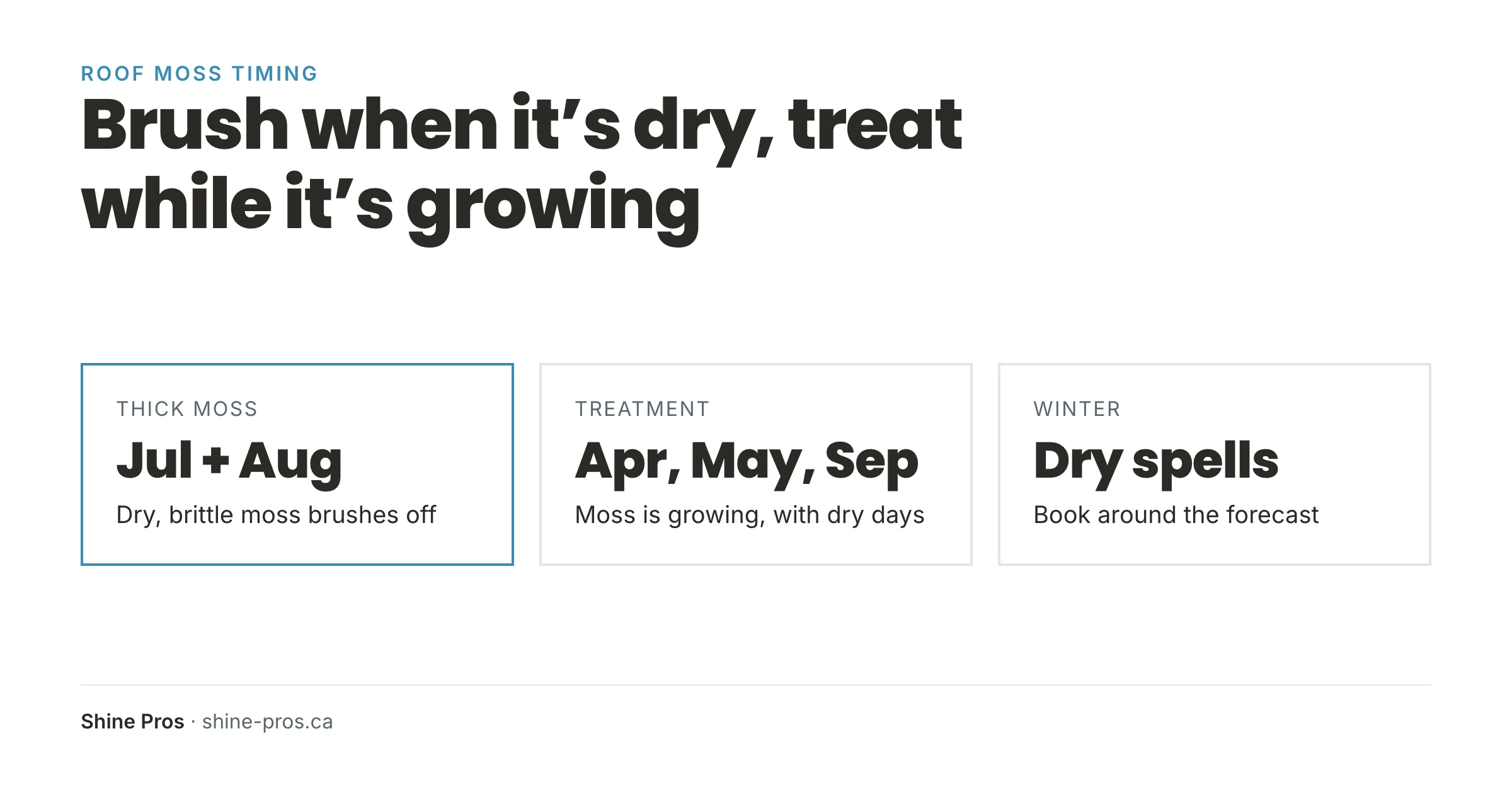
Timing helps too. Thick moss comes off best in dry weather, and treatments work best while moss is actively growing. Here’s the best time of year to remove roof moss in Victoria.
What do people get wrong when removing roof moss?
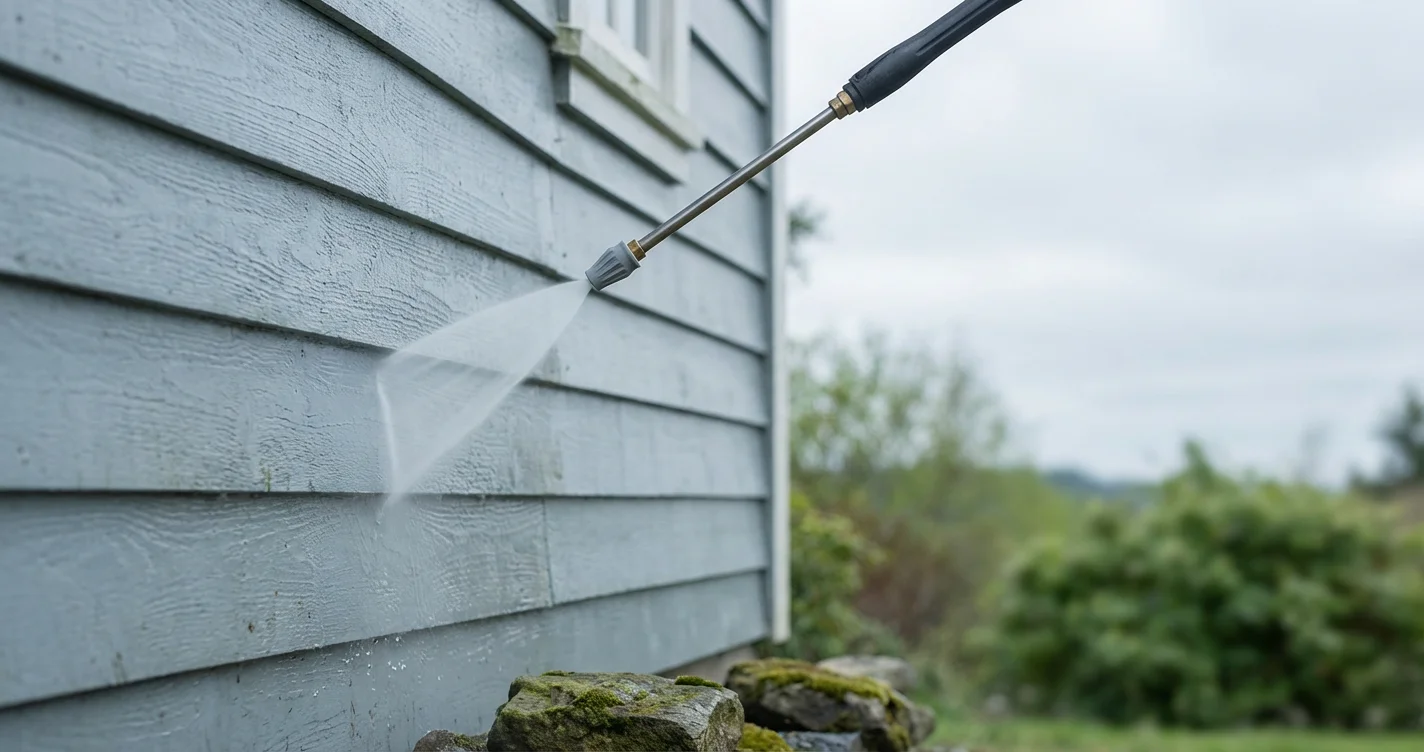
- Pressure washing shingles. This is the big one. High pressure strips granules and forces water up under the shingles. It looks clean for a season and shortens the roof’s life. We never put high pressure on shingles.
- Metal brushes and scrapers. They take the moss off and the top of the shingle with it.
- Walking on a damp roof. Wet moss is very slippery, even on a gentle pitch.
- Letting treatment run into the garden. Moss killers and bleach mixes can burn plants and lawn below the drip line.
- Brushing up the slope. It lifts shingle edges, which is the same damage moss does on its own.
- Skipping the treatment. Without it, the roots left behind grow straight back.
If you’re weighing the options, here’s how the moss removal methods compare, including which ones damage shingles.
When should you call a professional instead?
- The roof is two storeys or steeper than you can walk comfortably.
- The moss is thick enough that shingle edges are lifting.
- Granules are piling up in the gutters or at the bottom of downspouts.
- You don’t have fall protection, or anyone to hold the ladder.
If shingles are lifting or wearing, it’s also worth knowing how fast moss damages a roof and when cleaning is still enough.

What does professional roof moss removal cost in Victoria?
Roof cleaning with moss removal starts at $600. A 2,000 sq ft roof costs about $626 with light moss and about $1,000 with heavy moss. A 3,500 sq ft roof runs about $1,000 light and $1,800 heavy. You get an exact price before any work starts. For your own roof, try the roof cleaning cost calculator or read what roof moss removal costs in Victoria.
That price covers the same method as above, done with fall protection: hand brushing with a gentle brush, a soft wash, and a treatment. We clean up as we go so no moss ends up in your garden beds or rock, haul the debris away, and do a walk-around with you at the end. Roofs come with a two-year moss-free guarantee, and if we miss a spot we come back and fix it at no charge.
How do you keep moss from coming back?
- Trim branches that hang over the roof, so it gets light and dries out.
- Keep gutters clear so water drains off the roof edge.
- Sweep leaves and needles off the roof before they pile up.
- Re-treat when you see the first green film, before it becomes clumps.
We book roof moss removal year-round, picking dry windows even in winter. To get on the schedule, book roof moss removal in Victoria, call us at (778) 743-4377, or request a free quote online.