
In This Article
• Why Old Siding Reacts Differently to Water and Pressure
• Soft Washing vs. Pressure Washing — Which One Is Right for Your Home?
• Types of Old Siding and the Best Way to Clean Each One
• What a Cleaner Should Check Before Washing Your Heritage Home
• How Often Should You Wash an Old Home — and What Happens If You Don’t?
Your home has been standing for 80 years. The last thing you want is a pressure washer tearing apart the cedar siding — or pushing water behind boards that haven’t been sealed since the 1970s.
Old homes built before 1960 often have siding that reacts very differently to water than newer materials like vinyl. Whether house washing will hurt your home’s siding depends on the cleaning method used and the skill of the person doing the work.
This article explains when house washing is safe for old siding, what method to ask for, and what questions to ask before anyone starts spraying. We’ll cover how different siding types handle water, why soft washing is almost always the best choice, and what a good cleaner should check before starting.
Quick Answer: Will House Washing Damage Old Home Siding?
House washing will not damage old siding if it’s done the right way — but how it’s done matters a lot. Old wood, cedar, and stucco are softer and more fragile than new siding. High-pressure water can push into gaps, strip paint, and lift the wood grain. Soft washing — which uses low pressure and a safe cleaning solution — is the right method for heritage homes. A trained cleaner should check your siding, paint, and caulking before starting. When those steps are followed, house washing is safe and actually helps protect your siding by removing mold, algae, and dirt.
Worried about your siding? Book a free heritage home assessment to have an expert check your home before any work begins.
Why Old Siding Reacts Differently to Water and Pressure
Not all siding is made the same. New materials like vinyl and fibre cement are built to handle water and pressure. Old siding was not — and years of wear make it even more delicate.
Old cedar and wood clapboard get more brittle over time. Their natural oils wear away after years of expanding and shrinking with the seasons. Paint applied before 1980 often contains lead. That kind of paint can lift, crack, or peel under high water pressure — which can damage your home and create a health risk for your family.1
Old stucco and pebbledash are also tricky. These surfaces have tiny pores and small uneven spots. High-pressure water doesn’t just clean the surface — it pushes moisture into those weak spots. That can cause the wall behind the siding to break down and let water in.
Gaps in the caulking and dried-out seals are other weak points on older homes. A pressure washer can force water into places that were never meant to get wet.
Heritage Material Risk Overview
| Material | Risk Level | Best Method |
| Old-growth cedar | High | Soft wash only |
| Wood clapboard | High | Soft wash only |
| Original stucco / pebbledash | High | Soft wash only |
| Older brick | Medium | Low-pressure rinse or soft wash |
| Pre-1980 painted wood | Very High | Must be inspected before any wash |
On a 1940s cedar home in Victoria’s Rockland neighbourhood, cleaners once found three layers of old paint that would have peeled off instantly under normal pressure — taking decades of character with it. This is why checking your home before cleaning always comes first.
Soft Washing vs. Pressure Washing — Which One Is Right for Your Home?
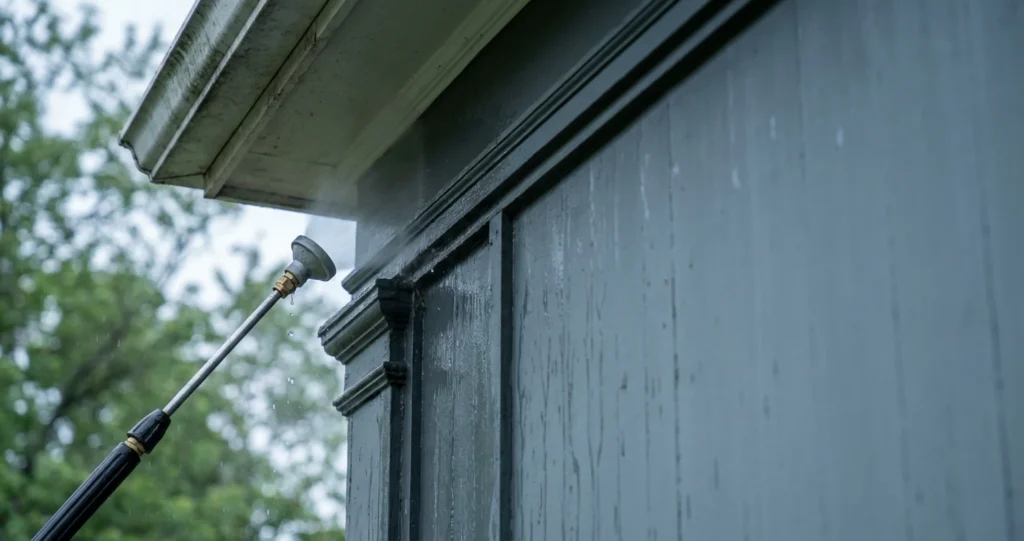
This is the most important question to ask a cleaning company before they show up. The difference between the two methods is big — and using the wrong one on an old home can cause damage that costs thousands of dollars to fix.
Soft Washing
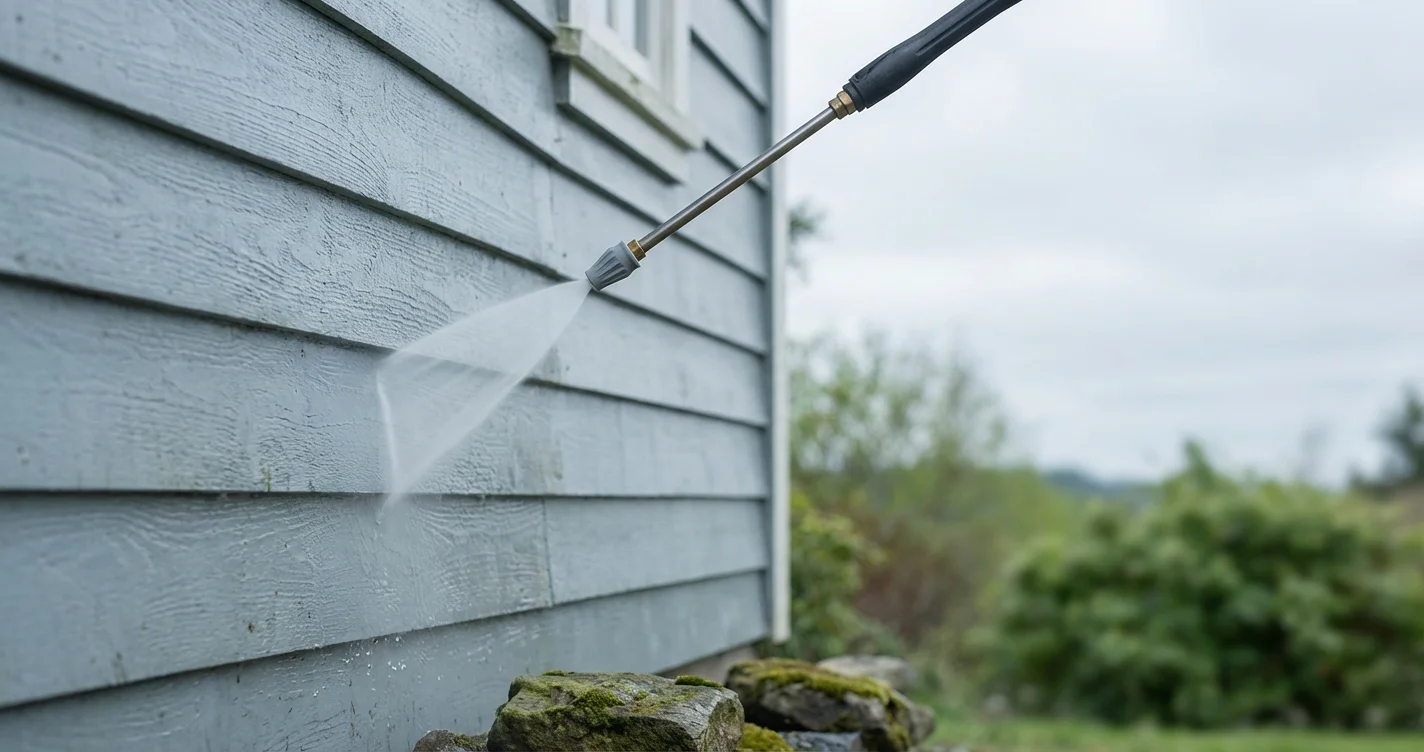
Soft washing uses very low water pressure — usually between 100 and 300 PSI. A garden hose is roughly that strong. It uses a safe cleaning solution to do the hard work. The solution breaks down algae, lichen, and mold at the root so they rinse away easily. The water is gentle enough that it won’t push into gaps, lift wood grain, or stress old paint.
For old siding, soft washing is almost always the right choice. The cleaning solution does the work — not the water pressure. Learn more about our house washing service in Victoria to see how we handle delicate and heritage siding.
Pressure Washing
Pressure washing can go above 3,000 PSI. That’s a lot of force. It’s great for concrete driveways, brick paths, and hard surfaces that are built to handle it. It is not right for old wood, stucco, or any siding that has aged and weakened over time.
Soft Wash vs. Pressure Wash — Heritage Home Comparison
• Soft Wash: Low pressure (100–300 PSI). Safe for all old siding. Removes algae and mold at the root. Won’t push water into gaps or lift paint.
• Soft Wash: Needs a trained cleaner who knows how long to leave the solution on each type of surface.
• Pressure Wash: High pressure (up to 3,000+ PSI). Works well on concrete, driveways, and hard outdoor surfaces.
• Pressure Wash: Not safe for cedar, clapboard, old stucco, or any painted wood from before 1980. Risk of serious damage.
In neighbourhoods like Fairfield, Rockland, and Oak Bay — which have many homes built before and after World War Two — soft washing is the only safe method for wood siding. Cleaning teams who work in these areas know this well.
Not sure which method is right for your home? Our team can check your siding before we give you a quote. Contact us for a free assessment.
Types of Old Siding and the Best Way to Clean Each One
Different siding materials have different weak spots. Knowing what your siding is made of — and what it needs — is the first step to cleaning it safely.
| Siding Type | Safe to Wash? | Method | Key Notes |
| Original cedar | Yes | Soft wash only | Soaks up water easily. Needs time to dry after washing. |
| Wood clapboard / beveled | Yes, with care | Soft wash only | Lap joints are the weak spot. Cleaning solution must not pool in the overlaps. |
| Older stucco / pebbledash | Yes, with care | Soft wash only | Porous surface. High pressure pushes water into weak spots and can let water in behind the wall. |
| Older brick | Usually yes | Low-pressure rinse | Mortar in older homes can crumble. Check condition first. |
| Pre-1980 painted wood | With inspection | Soft wash only | Peeling or flaking paint is a stop sign — washing will make it worse. |
Cedar is widely used in Victoria’s heritage homes. It soaks up moisture easily, so it needs low pressure and enough time to dry after cleaning. Clapboard siding has a weak spot at the lap joints — cleaning solution that pools in those overlaps can stain the wood or speed up rot.
Paint from before 1980 needs extra care. If the paint is already cracking, bubbling, or flaking, washing will make it worse. A trained cleaner should spot this during the check and stop before any water touches the wall.
Not sure about your siding type? Our team can check it before we give you a quote — reach out here.
What a Cleaner Should Check Before Washing Your Heritage Home
Knowing your siding type is step one. The next question is what a good cleaner should actually do with that information before any water touches your home. A proper check before the job starts is what tells a careful, skilled company apart from one that causes damage and walks away.
Here are five questions worth asking before any work begins:
• Will you check the caulking, gaps, and paint before giving me a quote? Missing or dried-out caulking and failing paint need to be found before any water is used — even at low pressure.
• Does the age of my home mean it could have lead paint? Homes built before 1980 may have lead in the paint. A responsible cleaner will flag this and adjust how they work.
• Will you look for water damage or rot? Washing a home that already has water damage or rot can make the problem worse. This should be checked before the quote is set.
• How will you protect my garden and outdoor areas from the runoff? Biodegradable cleaning solutions are low-risk, but the cleaner should still think about where water drains — especially near garden beds.
• Can you give me a written plan that lists the method (soft wash), the pressure settings, and the cleaning product? A trusted company should have no problem putting this in writing.
This check usually takes about 15 minutes on-site. It has helped avoid several costly mistakes on heritage properties across Greater Victoria. It’s a standard part of how good cleaning companies approach older homes — and it should be a must-have when you decide who to hire.
How Often Should You Wash an Old Home — and What Happens If You Don’t?
For most homes in BC’s coastal climate, washing the outside every one to two years is a good starting point. Heritage homes with lots of trees nearby, north-facing walls, or homes close to the ocean may need cleaning closer to once a year.
Victoria’s weather is beautiful — and tough on homes. Heavy rain from October through March, salty air from the coast, and high moisture in the air all create the perfect conditions for algae, lichen, and mold to grow fast. Algae, lichen, and mold don’t just look bad. Left unchecked, they cause real structural damage.
Algae holds moisture against wood and paint. Lichen — that rough, crusty growth that looks like barnacles — makes acids that slowly eat away whatever it’s growing on. Over time, this kind of damage can destroy the very materials that make your old home special.
The money side is simple: a professional house wash every year or two costs much less than the repairs you’ll face if you skip it. Paint ruined by algae means a full repaint. Water getting behind damaged siding means wall repairs. Skipping regular cleaning almost always leads to much bigger costs later.
If your heritage home hasn’t been cleaned in the last two years — especially if it has lots of trees nearby or north-facing walls — it’s worth getting a check done before the next rainy season.
Protect your home’s original siding. See our professional house washing service for heritage and older homes or get a free quote today.
Ready to Protect Your Heritage Home?
Shine Pros serves Victoria, Saanich, Oak Bay, Langford, Esquimalt, and the rest of the Greater Victoria area. Our team knows BC’s coastal climate well and has years of experience working with heritage and older homes.
Book a Heritage Home Assessment →
References
1 Health Canada. Lead-based paint. Government of Canada. https://www.canada.ca/en/health-canada/services/home-safety/lead-based-paint.html




2 Responses
Boostaro is a modern mens wellness formula created to support daily vitality, stamina, and confidence through a practical, natural routine.
Appreciate this post. Will try it out.