How to Clean Windows Like a Pro: The Complete Step-by-Step Guide

Have you ever spent an hour cleaning your windows only to see streaks when the sun hits them? Many homeowners have this problem. They think they need special products, but the real secret is doing the steps in the right order.

This guide shows you the same steps professional window cleaners use to get streak-free results. You’ll learn the right order to prep, clean, and finish your windows. You’ll also learn which mistakes cause streaks and when you need professional help.

Whether you’re cleaning inside windows or outside windows, following the right order makes a big difference. Let’s get those windows crystal clear.


What Is the Proper Order for Cleaning Windows?

The proper order for cleaning windows has five main steps:

  1. Remove debris – Brush or vacuum window frames, sills, and screens first
  2. Pre-treat problem spots – Put solution on stubborn spots and wait 2-3 minutes
  3. Wash the glass – Clean from top to bottom using overlapping strokes
  4. Squeegee or wipe – Remove solution right away, working in one direction
  5. Detail the edges – Wipe frames and sills dry to stop water spots

Professional window cleaners always work top-to-bottom and inside-before-outside. This keeps clean surfaces from getting dirty again. This step-by-step method stops the most common mistakes that cause streaks.

For windows above the second story or hard-to-reach spots, professional window cleaning services in Victoria use special equipment like water-fed poles. These deliver safe, streak-free results without using ladders.


Why Window Cleaning Order Matters (Not Just the Products)

Most people think expensive cleaners are the secret to great results. But the truth is that your technique matters more than the products you use.

Cleaning in the wrong order makes surfaces dirty again. When you clean glass before wiping down frames, dirt and dust fall onto your fresh clean surface. When you skip removing debris first, you end up smearing dirt across the glass.

Bad drying technique creates streaks even with perfect cleaning solution. Temperature and timing change how fast the solution dries. On hot, sunny days, cleaning solution can dry before you wipe it away. This leaves visible marks behind.

Professional results come from following a proven system, not from secret formulas. After cleaning thousands of windows, we’ve learned that most streak problems come from doing steps in the wrong order. Homeowners who get the best results are the ones who follow the proper order every time.

Understanding this helps you save money on special products. What you really need is a better process.


Getting Ready: Setting Up for Success

Before you start cleaning, you need to set up your workspace and gather your tools. Getting ready prevents most common mistakes and saves time.

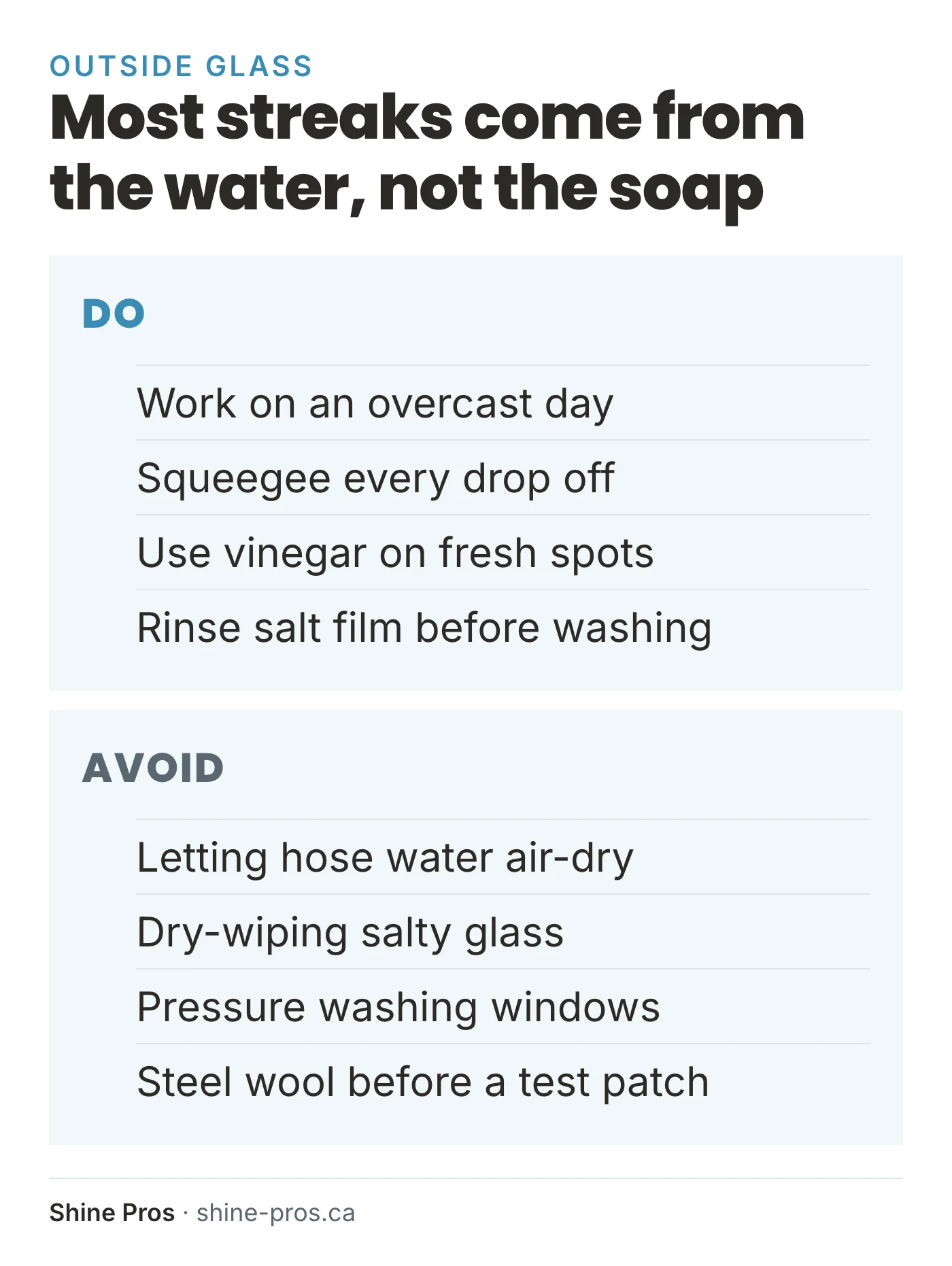
Choose the right conditions. Pick a cloudy day or work on the shaded side of your home. Direct sunlight makes cleaning solution dry too fast. This leaves streaks and marks. Early morning or late afternoon works well for outside windows.

Gather all tools first. You’ll need a bucket, squeegee or microfiber cloths, scrubber or sponge, and at least three separate cleaning cloths. Having everything nearby stops you from pausing mid-job to find supplies.

Protect your space. Move curtains, blinds, and window treatments away from the cleaning area. Put down drop cloths or old towels on sills and floors to catch drips. This stops water damage to your home and makes cleanup easier.

Remove screens first. Take screens off before you start cleaning. Rinse them with a garden hose or in the shower. Set them aside to dry while you work on the glass.

Check the weather. If you’re cleaning outside windows, make sure rain isn’t coming in the next day or two. Fresh rainwater on newly cleaned windows can leave new spots.

Getting ready takes just a few minutes but makes the whole cleaning job smoother.


Step-by-Step Window Cleaning Process

Now you understand why order matters and you’ve set up your workspace. Here’s the exact five-step process professional window cleaners follow.

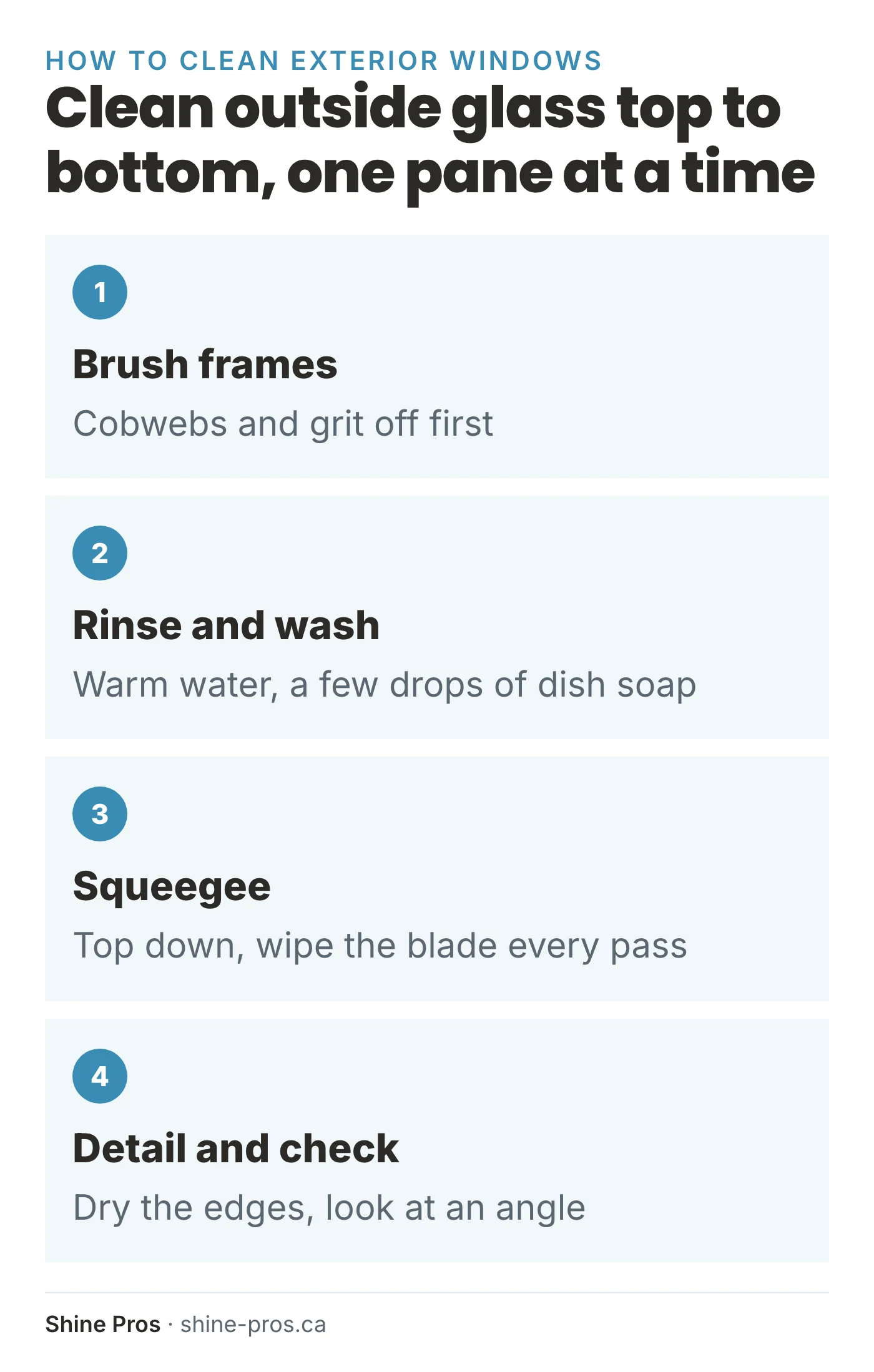
Step 1: Remove Loose Debris and Dust

Start by vacuuming or brushing window frames, tracks, and sills. Use a dry cloth to wipe down the frame completely before using any water or cleaning solution. This stops you from making mud when water mixes with dry dirt.

Pay special attention to corners and track channels where debris piles up. A small handheld vacuum with a brush attachment works well for this step.

Step 2: Pre-Treat Stubborn Spots

Put cleaning solution directly on bird droppings, sticky residue, paint overspray, or any stuck-on material. Let the solution sit for a few minutes to break down the buildup.

For really stubborn spots, gently scrape with a plastic scraper. Never use metal scrapers or razor blades on glass. These can cause permanent scratches.

Step 3: Apply Cleaning Solution

Start at the top of the window and work down. Use a scrubber or sponge to apply solution in an overlapping S-pattern. Make sure you cover everything without using too much solution.

The S-pattern makes sure you don’t miss any spots while stopping excess dripping. Work carefully across the whole window before moving to the next step.

Step 4: Remove Solution Right Away

This is the most important step for getting streak-free results. Remove the cleaning solution right after applying it using one of two methods:

Squeegee method: Start at the top corner and pull straight down in overlapping strokes. Wipe the squeegee blade with a clean cloth after each stroke. This stops you from putting dirt back on the glass.

Microfiber cloth method: Wipe in a single direction (never use circular motions). Work from top to bottom in straight, overlapping strokes.

The key is removing solution before it starts to dry. Work in sections on large windows instead of trying to clean the whole window at once.

Step 5: Detail the Edges and Frames

Use a clean, dry microfiber cloth to wipe window edges where the glass meets the frame. Dry the sills and frames completely. This stops water spots from forming as drips run down.

Check your work by looking at the glass from different angles to catch any missed spots. Natural light at an angle makes streaks easier to see than looking straight on.

Pro tip: We always carry three separate microfiber cloths—one for washing, one for drying glass, and one for frames. Using dirty cloths is the number one cause of streaks even when your technique is good. Using separate cloths for each job stops dirt and oils from spreading between surfaces.

Need help with hard-to-reach windows or want guaranteed professional results? Check out our window cleaning services in Victoria for homes across the Greater Victoria area.


commercial window cleaning

Best Window Cleaning Solutions (What Professionals Actually Use)

Now that you understand the order, let’s talk about what solution to use in step three. This is where most online advice differs.

Professional concentrates vs. spray bottles: Professional window cleaners usually use concentrates that you mix with water instead of ready-made spray bottles. Concentrates give you better value and let you mix exactly the right strength for your cleaning needs. Many professional solutions use special ingredients that help water spread evenly and prevent streaking.

Simple dish soap solution: For basic window cleaning, mix just a few drops of dish soap per gallon of water. This creates enough cleaning power for most home windows without leaving marks. Use less soap rather than more. Too much soap causes streaks and attracts dirt faster.

Vinegar solution pros and cons: White vinegar mixed with water works well for removing hard water spots and mineral deposits. However, vinegar has limits. It doesn’t work as well on heavy dirt compared to other cleaners. Some window makers warn against using vinegar often, especially on tinted windows and certain frame materials.

When NOT to use vinegar: Avoid vinegar on tinted windows and wooden frames if you clean often. Use vinegar-based solutions sparingly to protect window finishes.

What prevents streaks: Professional cleaners don’t rely on special ingredients. They prevent streaks through good technique. They remove solution before it dries, use clean tools, and work in the right weather. The cleaning solution just needs to break down dirt without leaving marks behind.

Not sure if your windows need professional treatment for stubborn stains or buildup? Contact us for a free inspection to find out what’s causing stubborn cloudiness or spots.


Common Window Cleaning Mistakes and How to Avoid Them

Even when you follow the right order and use the right solution, these five mistakes can ruin your results:

Mistake #1: Cleaning in direct sunlight. When solution dries before you can wipe it away, it leaves visible marks and streaks. Always work in shade or on cloudy days. If you must clean in sunshine, work quickly in small sections.

Mistake #2: Using dirty tools. Dirty squeegees, sponges, or cloths put dirt back onto the glass you’re trying to clean. Rinse your tools often during the job and start with completely clean equipment.

Mistake #3: Circular wiping motion. Wiping in circles creates visible swirl marks that catch light at certain angles. Always wipe in straight lines using one direction. Go horizontal, vertical, or diagonal, but never circular.

Mistake #4: Not drying window edges. Water sitting in the corners and edges runs down across your clean glass. This creates new streaks minutes after you finish. Always detail the edges as your final step. Make sure every bit of water is gone.

Mistake #5: Skipping frame prep. When you use water or solution without first removing dry dirt from frames and sills, you create mud that drips onto your glass. The debris removal step isn’t optional. It’s the foundation for everything that follows.

Removing cloudy haze: If your windows look cloudy or filmy even after cleaning, you likely have mineral deposit buildup from hard water. This needs acidic cleaning solution to dissolve the deposits. For stubborn cloudiness, professional cleaning with special treatments may be needed to fully restore clarity.


Interior vs. Exterior Window Cleaning: Does Order Matter?

Even when you follow the right order and use the right solution, one final thing affects your results: which side of the window you clean first.

Always clean inside windows first. This workflow stops you from tracking outdoor debris and dirt inside your home. Start inside, finish all inside windows, then move outside. This way you’re not walking in and out over and over with dirty shoes and equipment.

Use different tools for each side. Keep separate cleaning cloths and equipment for inside versus outside work. Outdoor surfaces usually have more dirt, pollen, and grime. Using the same tools for both sides moves this dirt to your inside glass.

Inside-specific considerations:

  • Protect floors and furniture from drips with drop cloths
  • Be careful around electrical outlets and switches near windows
  • Watch for delicate window treatments that could be damaged by water
  • Work carefully to avoid bumping into indoor furniture

Outside-specific considerations:

  • Ladder safety becomes important for second-story windows
  • Weather conditions affect your work more than indoor cleaning
  • Outdoor debris and biological growth may need stronger solutions
  • Some windows are too dangerous to clean yourself

For two-story homes, professional service for outside upper windows removes the safety risks that come with ladder work. Ladders are a common source of injuries, with WorkSafeBC reporting that proper ladder safety rules are important for preventing falls.<sup>1</sup> Ground-based professional methods using water-fed poles provide a safer choice for upper-level windows.

For safe, efficient outside cleaning without ladder risks, see our residential window cleaning in Victoria designed specifically for homes throughout Saanich, Oak Bay, Langford, and surrounding areas.


When to Call Professional Window Cleaners

Understanding the proper order helps you tackle basic window cleaning successfully. However, some situations need professional equipment and skills beyond basic household tools.

Hard-to-reach windows above second story, skylights, and high cathedral windows need special equipment. Professional water-fed poles and safe access methods remove the risks that come with ladder work at height.

Multi-unit buildings and strata properties have unique challenges that go beyond typical home window cleaning. Working with property managers, following strata-specific safety requirements, and cleaning multiple units efficiently needs special experience. For strata buildings in Victoria, professional strata window cleaning services provide complete solutions designed for townhouse complexes, condominiums, and apartment buildings.

Time investment matters for larger homes. Professional teams finish window cleaning much faster than DIY attempts. They often finish in a small part of the time it takes homeowners to do the same work. If your time has value, professional service often makes financial sense.

Special situations benefit from professional treatment:

  • Post-construction cleaning needs removing paint overspray, stickers, and construction debris without scratching glass
  • Hard water stain removal needs acidic treatments and special tools you probably don’t have
  • Homes with solar panels need careful cleaning to protect expensive equipment while removing film that reduces efficiency

Equipment advantages make professional service worthwhile for many homeowners:

  • Water-fed poles reach three stories safely from the ground
  • Professional-grade squeegees deliver better results faster than household tools
  • Commercial concentrates clean more effectively than consumer products
  • Proper safety equipment protects both the cleaner and your property

How often to clean varies, but window cleaning professionals often suggest seasonal maintenance for most homes. Spring and fall cleaning addresses seasonal buildup and prepares your windows for changing weather conditions.

Regular professional maintenance often costs less over time than dealing with permanent staining or replacement needs caused by neglected windows.


Get Professional Results Without the Work

Following the proper window cleaning order delivers much better results than random technique or expensive products alone. By removing debris first, pre-treating problem spots, washing top-to-bottom, removing solution right away, and detailing the edges, you avoid the mistakes that cause streaks and smears.

Remember that successful window cleaning needs more than just knowing the steps. You need the right conditions, proper tools, and enough time to work carefully without rushing. Safety concerns and physical limits make some windows better left to professionals.

If you’re ready to skip the DIY frustration and enjoy professionally cleaned windows without the safety risks, we’re here to help. Our team serves homeowners throughout Victoria and surrounding areas with guaranteed streak-free results and full insurance coverage for your peace of mind.

Get your free quote today and discover what truly clean windows look like—no ladders required.


References

WorkSafeBC. (n.d.). Ladders – Tools, machinery & equipment. Retrieved from https://www.worksafebc.com/en/health-safety/tools-machinery-equipment/ladders

Facebook
Twitter
LinkedIn
Email

Leave a Reply

Your email address will not be published. Required fields are marked *