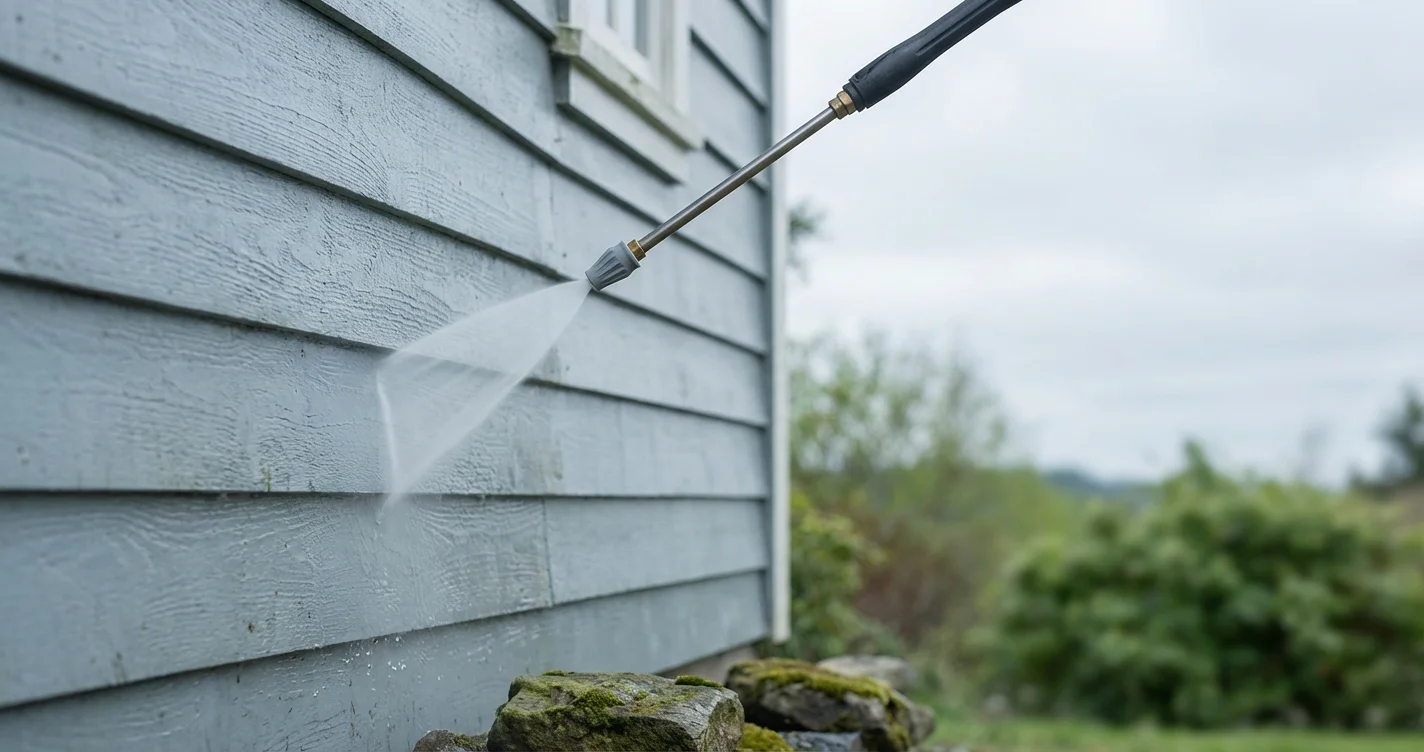
An eavestrough is the open channel fixed along the lower edge of a roof that catches rain as it runs off and carries it to a downspout, which drops the water away from the house. It’s the same thing most people call a gutter. “Eaves” is the part of the roof that overhangs the wall, and the trough hangs under it.
In Victoria you’ll hear “gutter” far more often than “eavestrough,” and there’s a real reason for that, covered below. Whatever you call it, the job is the same: keep roof water off your siding, windows and foundation. When fir needles and moss fill the trough, that job stops.
What is an eavestrough made of?
An eavestrough is a short system of parts, and the trough is only one of them. Most residential troughs are aluminum, which is light, doesn’t rust and comes in colours to match the trim.
- The trough, usually the K-style profile with a flat back that sits against the fascia board. Some older and heritage homes use rounder half-round troughs.
- Hangers, the brackets that hold the trough to the fascia.
- Outlets, the holes where water drops out of the trough.
- Downspouts, the vertical pipes that carry water down the wall.
- Elbows and extensions at the bottom, which point the water away from the foundation.
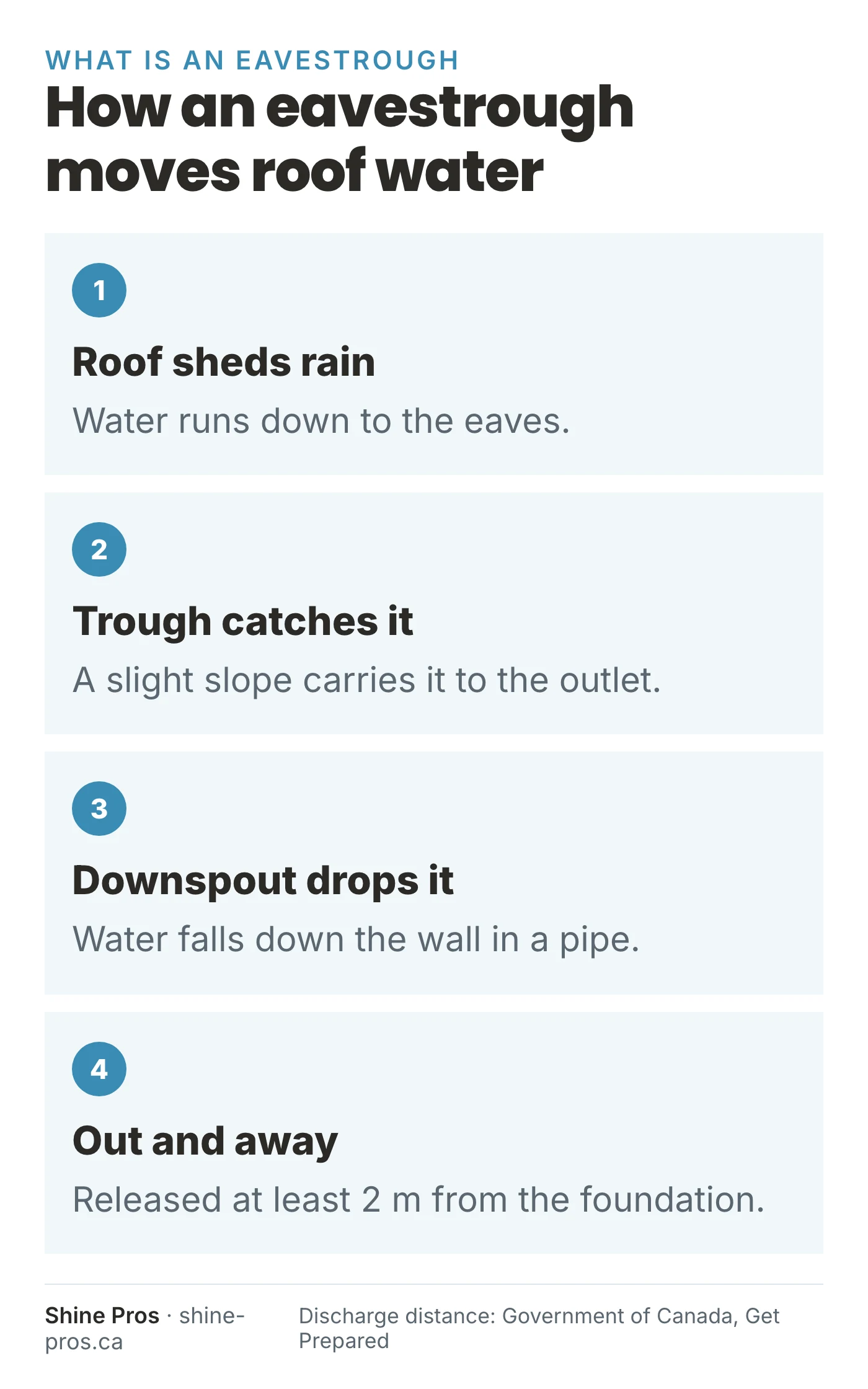
The whole run is set with a slight slope toward each outlet, so water drains instead of sitting.
Is an eavestrough the same as a gutter?
Yes. In everyday use, eavestrough and gutter mean the same part of the house. The difference is mostly about who’s talking.
The Dictionary of Canadianisms on Historical Principles at UBC traces the word to an 1863 citation and finds it about 25 times more common in Canadian English than in American English. The same entry notes that on the coasts, including BC, people prefer “gutter.” That’s why a Victoria homeowner might search “eavestrough,” then call us about their gutters.
The Government of Canada’s Get Prepared flood guidance draws one technical line: eavestroughs catch water from the eaves, and homes without eaves have gutters instead. For a deeper look at that distinction and the trough styles you’ll see here, read our eavestrough vs gutter breakdown for Victoria homes.
How does an eavestrough system work?
Rain runs down the roof, drops into the trough, flows along the slope to an outlet, falls through the downspout and leaves the house at ground level. Every step depends on the one before it staying open.
The same Get Prepared guidance gives the numbers that matter:
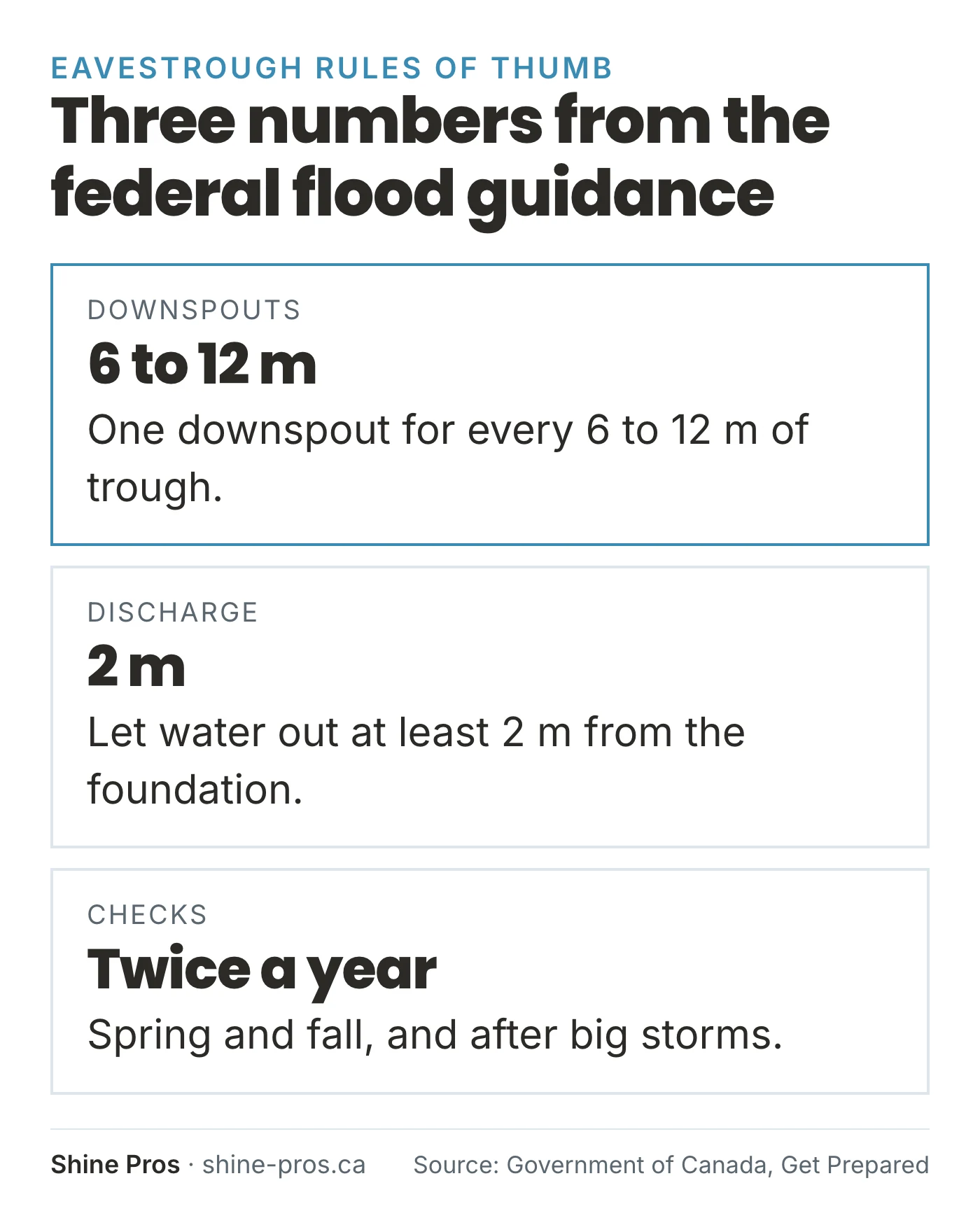
- One downspout for every 6 to 12 m (20 to 40 ft) of eavestrough.
- Downspouts should let water out at least 2 m (6 ft) from the foundation, where possible.
- Check eavestroughs and downspouts at least twice a year, in spring and fall, and again after big storms.
If a trough is sagging, the water pools in the low spot instead of reaching the outlet. If an outlet is packed, the water goes over the front edge. Both end in the same place: water against the house.
What goes wrong with eavestroughs in Victoria?
The short answer is debris, and on the south Island it’s a particular kind. Fir and cedar needles are small enough to settle flat along the bottom of the trough. Moss that grows on the roof sheds bits into the channel every time it rains. Leaves from maples and Garry oaks land on top, and the whole mix packs down into a wet mat that holds water like a sponge.
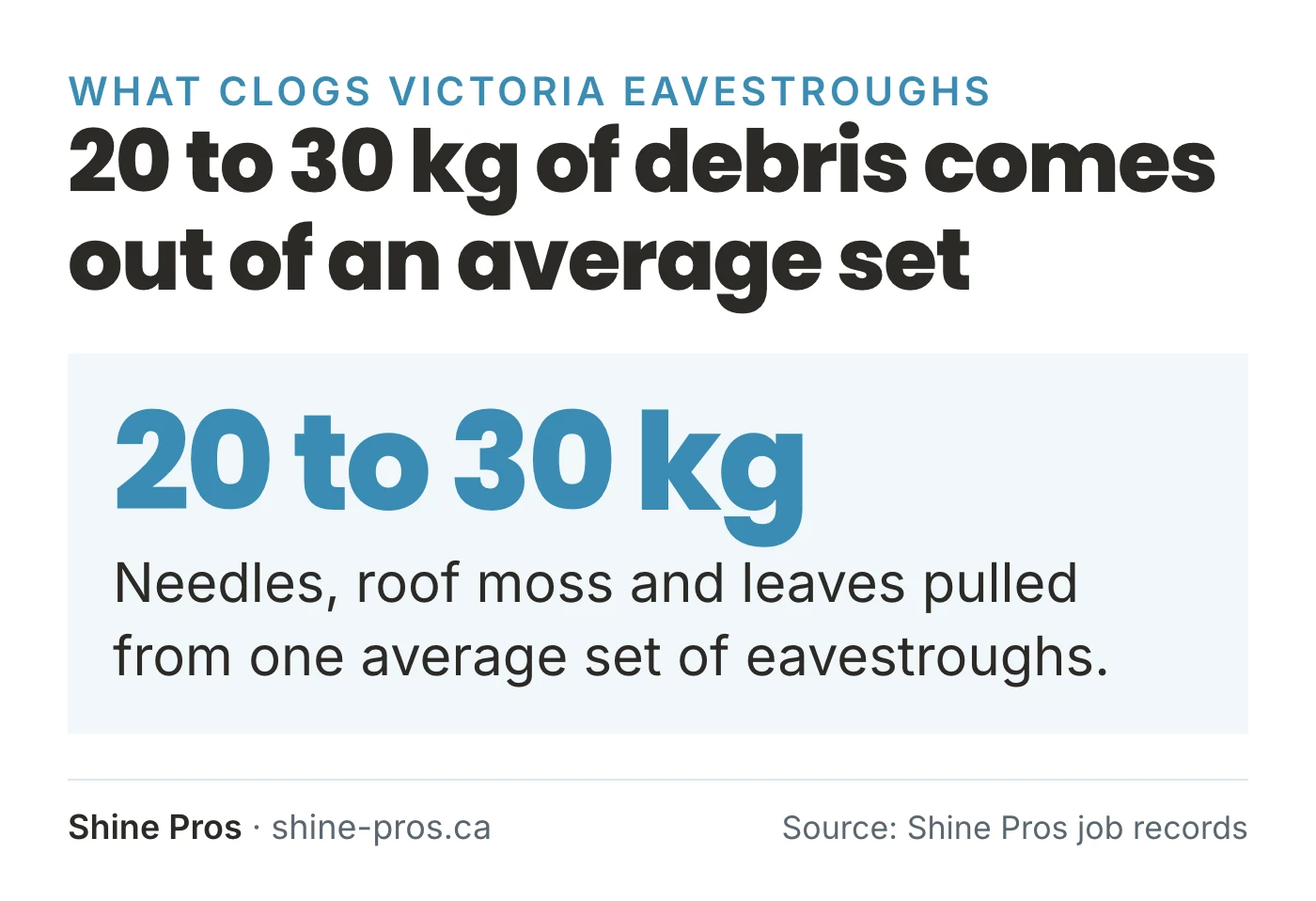
On an average home, we pull 20 to 30 kg of debris out of one set of eavestroughs. All of that weight hangs off your fascia by the hangers. Left long enough, the mat grows plants. On one Brentwood Bay house we cleaned before the owners sold, ferns were growing straight out of the gutters.
The other local factor is timing. Most of the needle and leaf drop lands in fall, right before the heaviest rain of the year, so a trough that looked fine in August can overflow in the first November storm.
What happens when an eavestrough overflows?
When an eavestrough overflows, the water it was supposed to carry away falls straight down beside the wall or runs down the siding. Here’s where that usually shows up:
- Stained or green siding under the overflow, since the wall stays wet.
- Soaked fascia boards, which can soften and rot behind the trough.
- Water splashing back against the foundation and pooling at the base of the wall.
- Garden beds washed out under the drip line.
- Heavier troughs pulling hangers loose, which leads to sagging and more pooling.
A plugged downspout does the same damage from the bottom up. Water backs up into the trough and spills at the corners, often right over a door or walkway.
How long do eavestroughs last?
Aluminum eavestroughs and downspouts last about 20 years, according to the Government of Canada’s Get Prepared guidance. Keeping them clean is a big part of reaching that number. A trough that carries a full load of wet debris all winter is under more strain at every hanger, and standing water sits against the seams.
Signs it’s time for repair or replacement rather than a cleaning: troughs that stay sagged after they’re cleared, seams that drip in dry weather, and fascia that feels soft when pressed. Those are worth raising on the walk-around at the end of a cleaning.
When should you clean eavestroughs in Victoria?
For most Victoria homes, clean the eavestroughs at least once a year in late fall, after the needles and leaves come down. Homes under big firs or cedars usually need a second visit in spring. That lines up with the twice-a-year check in the federal guidance.
We’ve written a full month-by-month timing guide for Victoria eavestroughs and a separate list of maintenance tips and common mistakes, so we won’t repeat them here.
If you’re thinking about doing it yourself, be honest about the ladder. One of our customers tried to clean her own gutters after a previous company left a mess, fell off the ladder and broke her back.
What does eavestrough cleaning cost in Victoria?
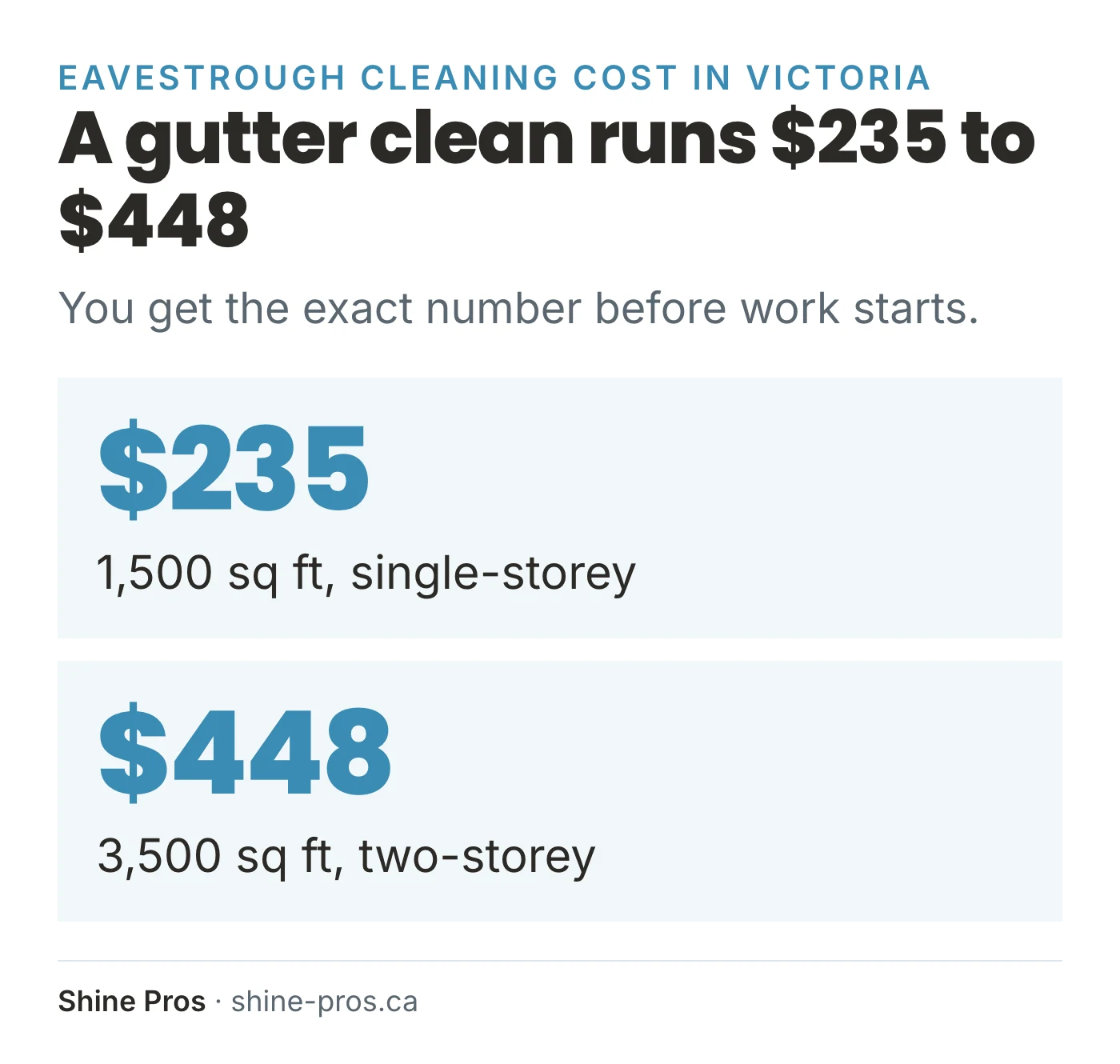
At Shine Pros, a gutter clean runs from $235 for a 1,500 sq ft single-storey home to $448 for a 3,500 sq ft two-storey. Most homes land between the two, and you get the exact number before we start.
We use ladder standoffs, which keep the ladder off the troughs and siding so nothing gets bent or scuffed, and they make the work safer for the crew. Every channel gets cleared, downspouts get checked, the debris is hauled away, and we walk the property with you at the end. Alex and Emma, a husband-and-wife team, have been doing this across Greater Victoria since August 2022, and the person who quotes the job is the one who does it.
If your roof is shedding moss into the troughs, roof cleaning and moss removal fixes the source. We also handle downspout cleaning and pressure washing for the rest of the exterior.
See pricing and book on our gutter cleaning service in Victoria page.
Common questions about eavestroughs
What is another name for an eavestrough?
Gutter is the common other name, and it’s the word most people in BC use. You’ll also see eaves trough, eaves-trough, rain gutter and eavestroughing, which usually means the whole system including downspouts.
How do you pronounce eavestrough?
It’s said “eevz-troff.” The first part rhymes with “leaves” and the second sounds like “trough,” as in a water trough for animals.
Is eavestrough a Canadian word?
Mostly, yes. UBC’s Dictionary of Canadianisms finds it about 25 times more common in Canadian English than in American English, though coastal Canadians, including people in BC, tend to say gutter.
Are the soffit and fascia part of the eavestrough?
No, but they sit right beside it. The fascia is the board the trough hangs from, and the soffit is the panel under the roof overhang. An overflowing trough soaks the fascia first, which is why rot often starts there.
How often should eavestroughs be cleaned in Victoria?
At least once a year in late fall for most homes, and twice a year if big firs or cedars hang over the roof. The Government of Canada’s Get Prepared guidance says to check them every spring and fall.