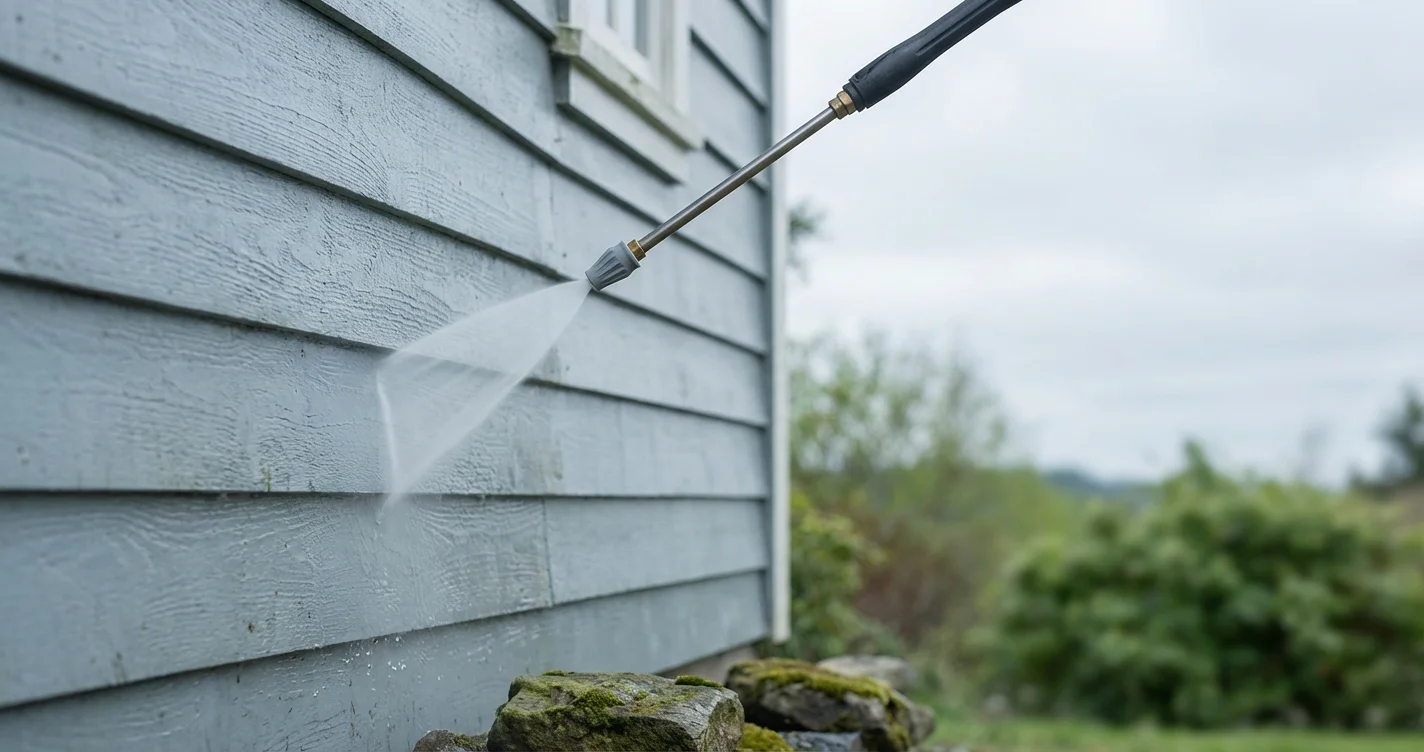
The best time to clean your eavestroughs in Victoria BC is twice a year: once in late spring (April to May) and once in late fall (October to November). These two cleanings protect your home through the wet winter months and clear out seasonal debris before it causes blockages, water damage, or foundation issues.
Victoria has the mildest climate in Canada, but that mild weather creates specific eavestrough challenges. Warm, damp winters promote moss and algae growth inside troughs. Spring brings cherry blossoms, cottonwood seeds, and pine pollen that clog downspouts. Fall dumps leaves from the Garry oaks and big-leaf maples that line streets across Fairfield, Fernwood, and Oak Bay. Knowing when to clean your eavestroughs, and recognizing the signs that they need attention right now, saves you from expensive repairs down the road.
Victoria’s Eavestrough Cleaning Calendar
Victoria’s weather follows a predictable pattern that directly affects your eavestroughs. Here is a month-by-month breakdown of what is happening in your troughs and when to take action.
| Season | Months | What Happens | Action Required |
| Early Spring | March – April | Winter debris loosens. Moss starts growing. Early blossoms fall. | Inspect for winter damage. Schedule spring cleaning for April. |
| Late Spring | May – June | Cherry blossoms, cottonwood fluff, and pine needles accumulate. | Primary cleaning window. Clear all debris. Flush downspouts. Check for leaks. |
| Summer | July – August | Dry season. Minimal accumulation. Bird nests may form in unused downspouts. | Quick visual inspection only. Remove any nesting material. |
| Early Fall | September | First leaves begin to drop. Garry oak acorns start falling. | Monitor accumulation. Plan fall cleaning date. |
| Late Fall | October – November | Heavy leaf drop from deciduous trees. First heavy rains arrive. | Primary cleaning window. Full cleanout before winter rains. |
| Winter | December – February | Sustained rainfall. Troughs at maximum load. Moss accelerates. | Do not clean (wet, slippery conditions). Address emergencies only. |
The two cleaning windows, late spring and late fall, are the ones that matter most. If you only clean your eavestroughs once a year, make it late fall. Getting ahead of Victoria’s October-to-February rainy season is the single most important thing you can do to protect your home from water damage.
Why Victoria’s Climate Makes Eavestrough Timing Critical
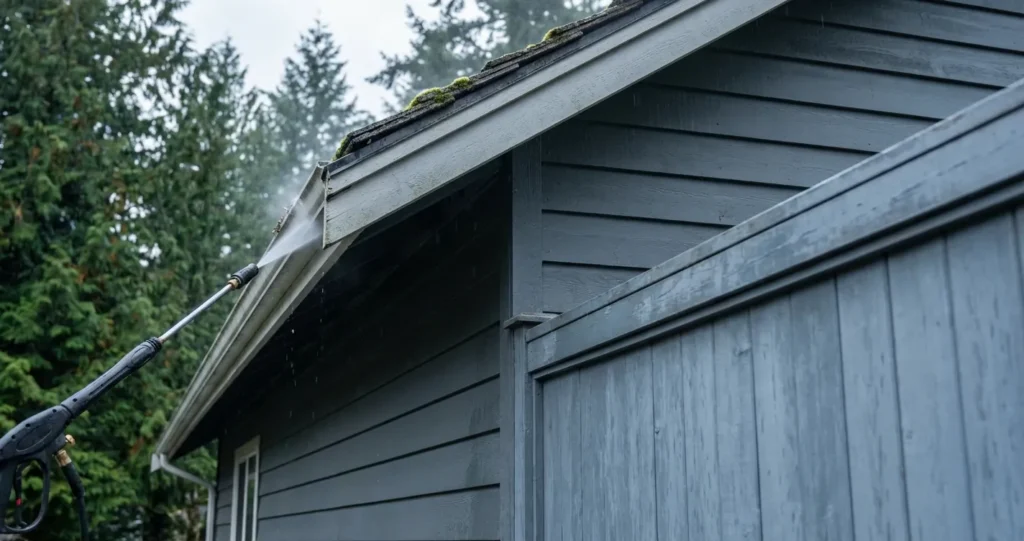
Victoria averages about 608 mm of rain annually, with roughly 75% of that falling between October and March. Unlike Vancouver, which gets rain year-round, Victoria has a distinct dry summer season followed by an intense wet season. This pattern means your eavestroughs go from mostly empty in July to full capacity by November.
Here is what makes Victoria’s climate particularly challenging for eavestrough systems:
Moss and algae. Victoria’s mild winters (4 to 10 degrees Celsius) rarely freeze, which means moss never goes dormant. It grows inside eavestroughs year-round, forming a spongy layer that traps sediment and blocks water flow. Neighborhoods close to the ocean, like Dallas Road, James Bay, and Esquimalt, see accelerated growth from the combination of moisture and salt air.
Cherry blossom season. Victoria is famous for its spring blossoms. But those petals do not just land on sidewalks. They pack into eavestroughs in dense, wet layers that dry into a cement-like sludge by June. Properties near Beacon Hill Park, Moss Street, and the Fairfield corridor are especially affected.
Garry oak leaf drop. The Garry oak is native to southern Vancouver Island and drops large, lobed leaves in October and November. These leaves are wide enough to bridge across standard K-style eavestroughs, creating dams that trap smaller debris behind them. Homes in Oak Bay, Saanich, and along the Patricia Bay Highway corridor deal with heavy oak leaf accumulation every fall.
Cottonwood and alder seeds. In late May and June, black cottonwood trees release millions of fluffy seeds that stick to wet eavestrough interiors. Alder trees drop catkins that break apart into small, sticky fragments. Both of these create a fine debris layer that is difficult to remove once it dries.
Five Warning Signs Your Eavestroughs Need Cleaning Now
You do not always need to wait for the scheduled cleaning windows. These signs mean your eavestroughs need immediate attention, regardless of the month. For a fuller rundown, here are the telltale signs your gutters are overdue.
- Water overflowing during rain. If you see water cascading over the front edge of your eavestroughs during a rainstorm, there is a blockage. This is the most common sign of clogged troughs and the easiest to spot. Stand outside during a moderate rainfall and watch the roofline.
- Sagging or pulling away from the fascia. Eavestroughs that are heavy with debris and standing water pull away from the fascia board over time. If you notice gaps between the trough and the roofline, the added weight is already causing structural damage.
- Plants growing in the troughs. Moss is one thing, but actual plants sprouting from your eavestroughs means there is enough accumulated soil and organic matter to support root systems. This is a sign of severe neglect and needs professional attention.
- Staining or water marks on exterior walls. Water that overflows behind the eavestrough runs down the exterior wall, leaving dark streaks and stains. On Victoria’s many painted wood-sided heritage homes, this trapped moisture can cause rot within a single season.
- Pooling water near the foundation. If you notice standing water or erosion at the base of your home’s exterior walls, your eavestroughs are likely not directing water to the downspouts properly. Foundation water damage is the most expensive consequence of neglected eavestroughs and one of the most common issues we see across Greater Victoria.
If you spot any of these signs, do not wait for your next scheduled cleaning. Contact Shine Pros for a free estimate and we will assess the situation before it gets worse.
DIY vs Professional Eavestrough Cleaning in Victoria
For single-story homes with easy roofline access, a DIY spring and fall cleaning can work. You need a sturdy ladder, work gloves, a gutter scoop or garden trowel, a bucket, and a garden hose. Always work with a partner who can spot the ladder.
However, professional cleaning makes more sense in several common Victoria scenarios:
Multi-story homes. Two and three-story homes in Fernwood, James Bay, and downtown Victoria require extension ladders or boom lifts. The fall risk is significant and not worth the savings.
Steep or complex rooflines. Many of Victoria’s Tudor and Victorian-era homes have steep pitches, multiple gable ends, and intersecting rooflines. Accessing the eavestroughs safely requires specialized equipment and experience.
Strata properties. If you live in a strata building, eavestrough cleaning is typically the strata council’s responsibility. Strata eavestrough cleaning requires coordination, commercial-grade equipment, and proper insurance coverage.
Moss-heavy systems. If your eavestroughs have a thick moss layer, DIY cleaning often just pushes the problem further down the trough. Professional services use flushing techniques that clear the entire system, including downspouts, ensuring everything drains properly.
Unknown system condition. If you have never had your eavestroughs cleaned or recently purchased a home, a professional inspection combined with the first cleaning gives you a baseline understanding of your system’s condition. We regularly find cracked seams, rusted fasteners, and improperly pitched sections during routine cleanings.
Shine Pros is licensed and insured with up to $3 million in liability coverage and full WorkSafe BC compliance. We offer free estimates that consider your specific roof type, property size, and access conditions. Book your seasonal eavestrough cleaning today.
Frequently Asked Questions
What is the best month to clean eavestroughs in Victoria?
The best months are late April to mid-May for spring cleaning, and mid-October to mid-November for fall cleaning. Fall is the more critical of the two because it prepares your system for Victoria’s heaviest rainfall months (November through February). If you can only clean once a year, choose late October or early November after the majority of leaf drop has finished.
How much does eavestrough cleaning cost in Victoria BC?
Professional eavestrough cleaning in Victoria typically costs between $150 and $500 for an average-sized home. The price depends on the number of stories, roof complexity, debris level, and accessibility. Homes with steep pitches or heavy moss buildup tend to be on the higher end. Shine Pros provides free, no-obligation estimates based on your specific property.
How often should I clean eavestroughs if I have lots of trees?
Homes surrounded by mature trees, particularly Garry oaks, big-leaf maples, Douglas firs, or cherry trees, should clean eavestroughs three times per year: spring, midsummer, and fall. Properties in Oak Bay, Fairfield, and along older Saanich streets with heavy canopy cover often need that additional summer cleaning to keep up with seed and needle accumulation. If you are weighing your own schedule, this breakdown of how often gutters should be cleaned covers each property type.
Can I clean eavestroughs in winter in Victoria?
It is not recommended. Even though Victoria rarely freezes, wet roofs and ladders create serious slip hazards during the rainy season. Daylight hours are shorter, and debris is often soggy and heavy. If you have an emergency blockage in winter, the safest move is to book a gutter cleaning in Victoria with a crew that carries the right equipment and insurance.
What happens if I never clean my eavestroughs?
Neglected eavestroughs lead to water overflow, which causes fascia rot, exterior wall staining, foundation erosion, and basement flooding. In Victoria’s mild, wet climate, moss and organic debris also attract insects and create conditions for mold growth. The cost of repairing water damage from neglected eavestroughs is significantly higher than the cost of twice-yearly cleaning. Learn more about why gutter cleaning is so important.
About Shine Pros: Licensed and insured with up to $3 million in coverage and full WorkSafe BC compliance. Rated 5 stars across 124 Google reviews. Serving Victoria, Saanich, Oak Bay, Langford, Colwood, Sidney, Sooke, and surrounding areas. Get your free estimate today.